Braking and Grip
The EU Tyre Label: What the Wet Grip Letter Means
Class A needs a wet grip index of 1.55 or above, class E sits at 1.09 or below. One class step is worth 3 to 6 m of stopping distance, and A to E can exceed 18 m.
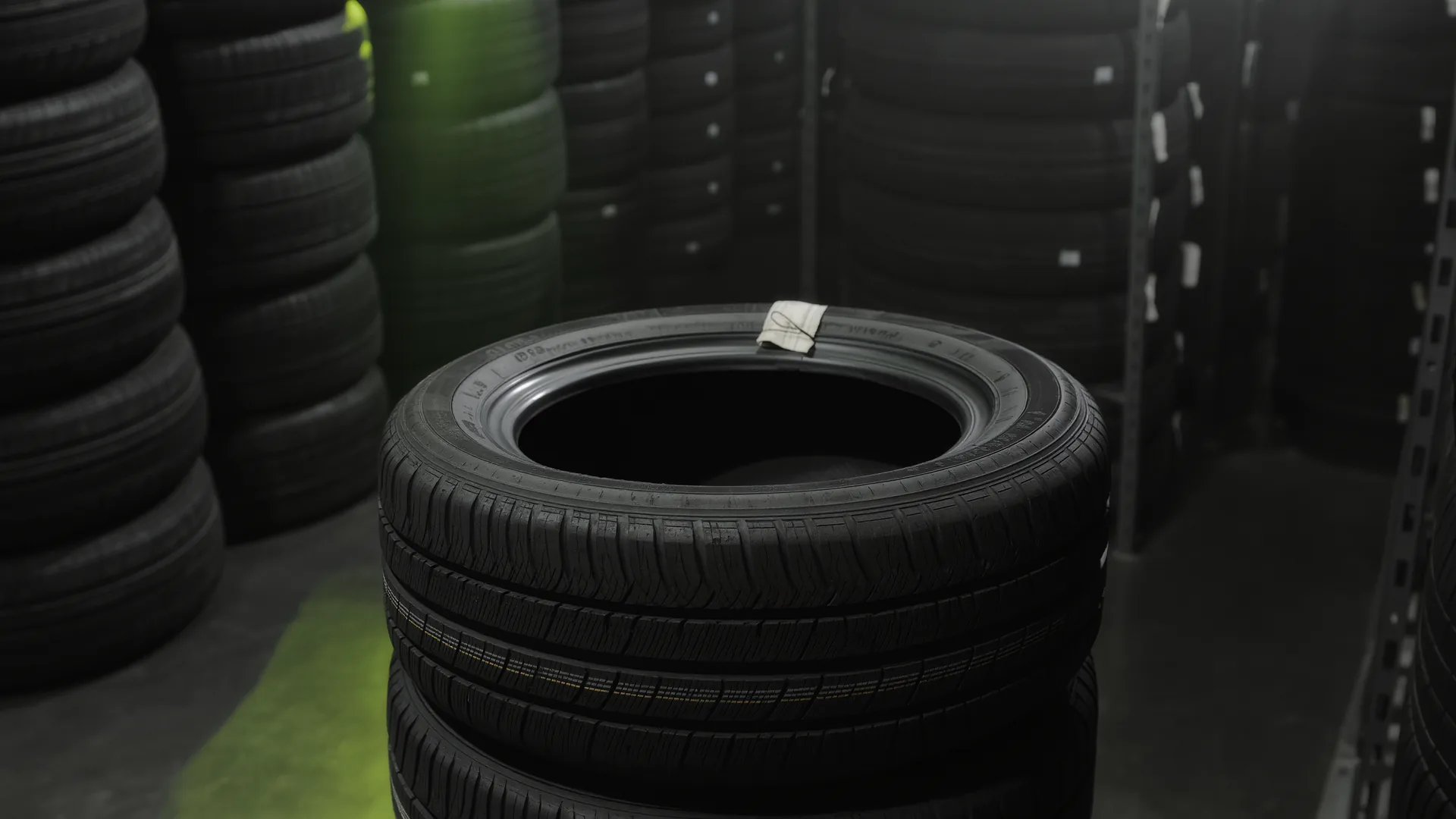
The wet grip letter on a European tyre label is a measured index, not an opinion. Under Regulation (EU) 2020/740 a passenger car tyre reaching class A needs a wet grip index of 1.55 or above, while class E is 1.09 or below. The test is a braking measurement from 80 km/h on wet asphalt. One class step is worth roughly 3 to 6 m of stopping distance, and the span from A to E can exceed 18 m, which is four car lengths.
The wet grip scale, exactly
| Class | Wet grip index G | Approximate stopping distance from 80 km/h |
|---|---|---|
| A | G ≥ 1.55 | 28 to 30 m |
| B | 1.40 to 1.54 | one step longer |
| C | 1.25 to 1.39 | 34 to 38 m |
| D | 1.10 to 1.24 | one step longer again |
| E | G ≤ 1.09 | the longest permitted |
The index is a ratio against a standard reference tyre rather than an absolute friction figure, which is why the numbers cluster around 1. The regulation reduced the wet grip scale from seven classes to five, so a label printed under the older framework does not map onto the current one directly.
The other letter: rolling resistance
The fuel efficiency letter is a rolling resistance coefficient, measured in newtons of resistance per kilonewton of load, and it has its own exact thresholds.
| Class | RRC in N/kN | Interpretation |
|---|---|---|
| A | RRC ≤ 6.5 | Lowest resistance, best efficiency |
| B | 6.6 to 7.7 | |
| C | 7.8 to 9.0 | Typical territory for performance tyres |
| D | 9.1 to 10.5 | |
| E | RRC ≥ 10.6 | Highest resistance |
The span from A to E is a factor of at least 1.63 in rolling resistance. On a 1,600 kg car, a coefficient of 6.5 N/kN gives about 102 N of resistance while 10.6 gives about 166 N, a difference of 64 N. At 120 km/h that is roughly 2.1 kW of continuous power, which is a meaningful share of what a car uses to cruise.
Why A on both letters is rare
Wet grip and low rolling resistance pull against each other at the level of the compound. Grip on a wet surface comes largely from hysteresis, the energy the rubber absorbs as it deforms over the microscopic texture of the road. Rolling resistance is also hysteresis, the energy the tyre absorbs as it deforms through the contact patch. They are the same mechanism, wanted in one place and not the other.
Modern silica compounds separate the two by making the loss frequency dependent: high at the frequencies a rough wet surface excites, low at the frequency of a tyre revolution. That is why the trade-off has softened considerably and why it has not disappeared. Track focused compounds rarely sit near the top of the rolling resistance scale, because nothing about their design is optimised for it.
What the label does not tell you
- Dry grip is not on the label at all. A tyre can be class A wet and unremarkable dry, or the reverse. The label was written for safety and efficiency, not for lap times.
- The test is a braking measurement from 80 km/h. It says nothing directly about aquaplaning resistance, wet cornering or behaviour at higher speed.
- It says nothing about wear. A soft compound can score well and last a fraction as long.
- It says nothing about cold behaviour. A summer compound below roughly 10 °C surface temperature loses 15 to 25 per cent of its grip regardless of its label.
- It is a new tyre figure. Performance changes as tread depth falls, and the label does not describe a worn tyre.
Questions readers ask
What does the wet grip letter mean?
It is a measured wet grip index from a braking test at 80 km/h on wet asphalt, expressed as a ratio against a reference tyre. Class A requires an index of 1.55 or above and class E is 1.09 or below, under Regulation (EU) 2020/740.
How much is one class worth in stopping distance?
Roughly 3 to 6 m. Across the full scale from A to E the difference can exceed 18 m, which is about four car lengths. An A rated tyre stops from 80 km/h in around 28 to 30 m and a C rated one in around 34 to 38 m.
What does the fuel efficiency letter measure?
Rolling resistance coefficient in newtons per kilonewton of load. Class A is 6.5 or below and class E is 10.6 or above. On a 1,600 kg car that span is about 64 N of resistance, roughly 2.1 kW of continuous power at 120 km/h.
Why are few tyres class A on both letters?
Because wet grip and rolling resistance both come from hysteresis in the rubber, wanted for one and not the other. Silica compounds separate them by making the loss frequency dependent, which softens the conflict without removing it.
Does the label tell me about dry grip?
No. Dry performance does not appear on the label at all, and neither does wear, cold weather behaviour or aquaplaning resistance. The label covers wet braking, rolling resistance and external noise for a new tyre.
Sources
- Regulation (EU) 2020/740, Annex I, for the exact wet grip index and rolling resistance coefficient thresholds for C1 tyres.
- Regulation (EU) 2020/740, consolidated text, on the labelling framework and the reduction from seven wet grip classes to five.
- Wet grip and the EU tyre label, on the 80 km/h braking test and the stopping distance implications of each class step.
- UN Regulation No. 13-H, on the vehicle level braking requirements the tyre has to support.
Rolling resistance forces are calculated as RRC multiplied by vehicle weight for a 1,600 kg car. Stopping distances by class are approximate, since the label reports an index rather than a distance.