Braking and Grip
Tyre Compound: Grip Bought With Life
The rubber that generates extra grip is the rubber that wears away producing it. Michelin measured a track compound at 2.9 s per lap, with two thirds of the gain gone after lap one.
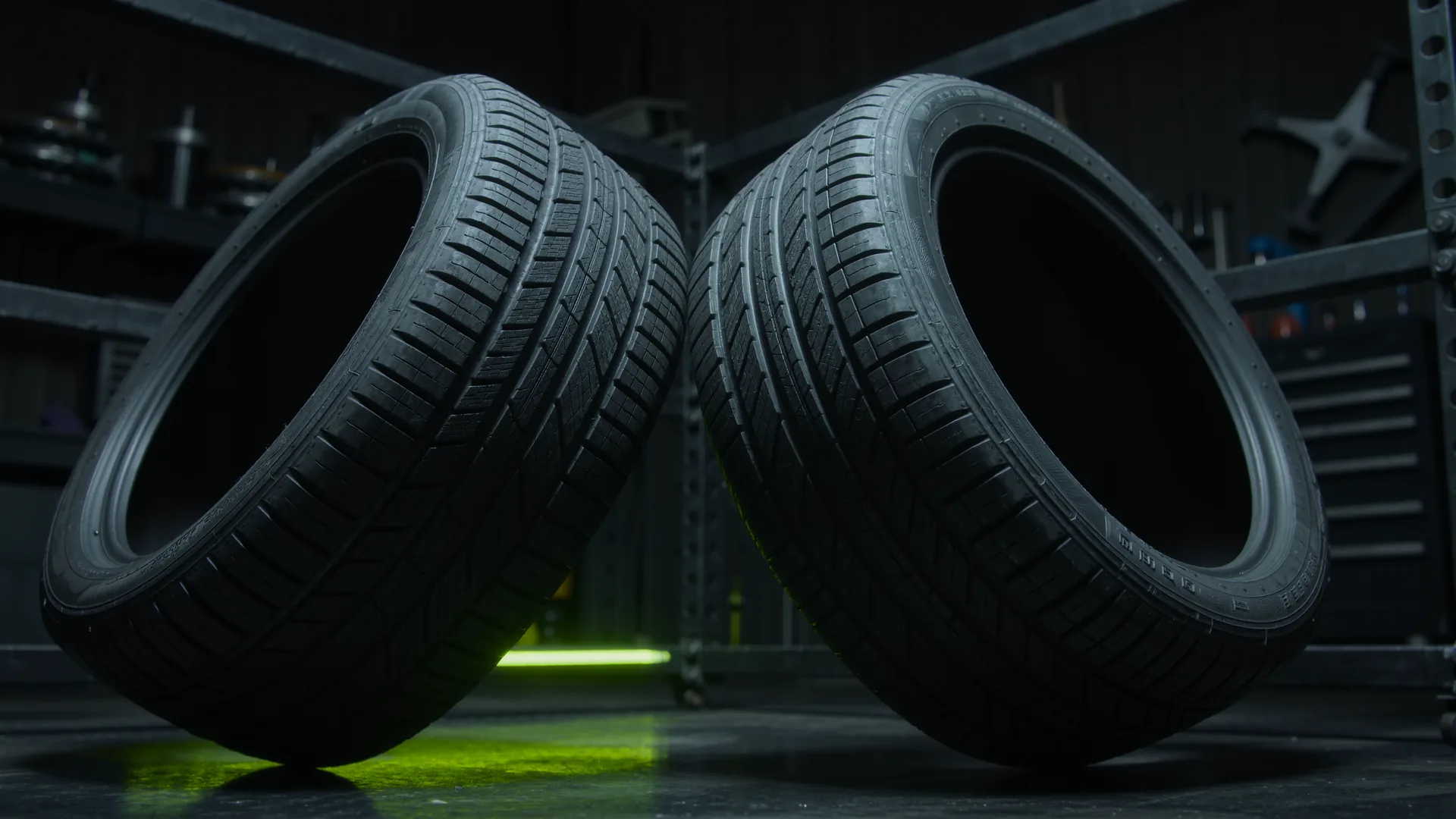
A tyre compound converts rubber into grip, quite literally. The mechanism that generates extra friction is the same mechanism that consumes the surface producing it, so grip and life are traded against each other rather than optimised together. Michelin measured a track focused compound at 2.9 s per lap quicker over a 6.277 km reference, and the shape of that gain is the real lesson: nearly two seconds on the first lap, then under one second per lap.
Where rubber grip comes from
Tyre friction is not a single effect. Two mechanisms operate together and they respond to compound differently.
- Adhesion is molecular attraction between the rubber and the road surface. It dominates on smooth, clean, dry surfaces and needs the rubber to be soft enough to make intimate contact.
- Hysteresis is energy absorbed as the rubber deforms over the microscopic texture of the road and fails to return all of it. It dominates on rough and wet surfaces, and it is the reason a wet grip compound and a low rolling resistance compound pull against each other.
Both improve as the compound gets softer, and both consume the surface layer as they work. Published friction coefficients follow directly: 0.7 to 1.0 for treaded street tyres, around 1.3 for historic racing tyres and 1.5 to 2.0 for slicks on dry asphalt.
The gain that does not last
| Measure | Advantage | What it reflects |
|---|---|---|
| Headline, best lap | 2.9 s per lap | Fresh compound at ideal temperature |
| First lap | almost 2 s | Peak surface condition |
| Subsequent laps | under 1 s | Degradation and heat accumulation |
Roughly two thirds of the advantage is present on the first lap and gone afterwards. A record attempt consists of exactly one flying lap, so it collects the full benefit. An owner doing a twenty minute session collects the smaller residual figure for most of it, which is why the tyre feels less transformative in practice than the headline suggests.
The temperature window
Every compound has a range in which it works, and it is narrower the softer the compound. Below it the rubber is too stiff to conform to the road texture, so hysteresis grip collapses. Above it the surface becomes too soft, shears rather than grips, and wear accelerates sharply.
Below roughly 10 °C surface temperature, a summer compound loses 15 to 25 per cent of its grip against the same tyre warm. That affects braking, cornering and traction simultaneously, and it is why cold weather testing produces figures that look like a different car. Track surfaces in direct sun sit 15 to 20 °C above air temperature, so the same air reading can put a tyre inside or outside its window depending on the cloud.
The four things a soft compound costs
- Life. The surface layer generating the grip is being consumed to produce it. Track compounds are measured in hours rather than tens of thousands of kilometres.
- Wet performance. Reduced tread void clears standing water less effectively. The EU tyre label makes this visible: class A requires a wet grip index of 1.55 or above and class E is 1.09 or below, measured braking from 80 km/h, and one class step is worth 3 to 6 m of stopping distance.
- Cold behaviour. The narrower the window, the worse the first ten minutes of every journey.
- Rolling resistance. Hysteresis is also what causes rolling resistance, so a high grip compound rarely reaches class A on the label, where the threshold is 6.5 N/kN against 10.6 for class E.
Choosing honestly
The decision comes down to which lap matters. If it is one flying lap on a warm dry day, the softest compound available is the right answer and the degradation is somebody else's problem. If it is a twenty minute session, a compound that holds its performance beats one that peaks and fades. If it is a road car in a country with weather, the wet grip letter is worth more than any dry lap time, because the stopping distance difference between class A and class E can exceed 18 m.
Questions readers ask
How much grip does a track compound add?
Michelin measured a track focused compound at 2.9 s per lap quicker over a 6.277 km reference. Published friction coefficients run from 0.7 to 1.0 for street tyres against 1.5 to 2.0 for slicks, which is close to a factor of two at the extremes.
Why does the advantage fade after one lap?
Because the surface layer that generates the extra grip is consumed producing it, and heat accumulates through a session. In the Michelin comparison nearly two of the 2.9 s came on lap one, with under a second per lap remaining afterwards.
How quickly do track tyres wear?
Fast enough that they are measured in hours rather than kilometres. Both grip mechanisms, adhesion and hysteresis, work by deforming and consuming the surface layer, so a compound that generates more grip is consuming itself more quickly.
What temperature does a compound need?
A range that narrows as the compound softens. Below roughly 10 °C surface temperature a summer compound loses 15 to 25 per cent of its grip. Track surfaces in sun sit 15 to 20 °C above air temperature, so the air reading alone does not tell you where the tyre is.
Do soft compounds always grip better in the wet?
No. Wet performance depends heavily on clearing water, which needs tread void that track compounds reduce. The EU label measures it directly: class A needs a wet grip index of 1.55 or above and class E is 1.09 or below, with the full span worth over 18 m of stopping distance.
Sources
- Michelin Cup 2 R against Cup 2, on the 2.9 s per lap figure and the fall from almost two seconds on lap one to under one second afterwards.
- Autosport technical forum, tyre coefficient of friction, on measured friction values across compound types.
- Tire friction overview, on adhesion and hysteresis as the two grip mechanisms.
- Regulation (EU) 2020/740, Annex I, for the wet grip index and rolling resistance thresholds.