Electric Performance
The Charging Curve: Why a Track Day Ends Early
A hot pack accepts charge slowly, and a track session is exactly what makes a pack hot. The cycle is 20 minutes of driving followed by a wait considerably longer than that.
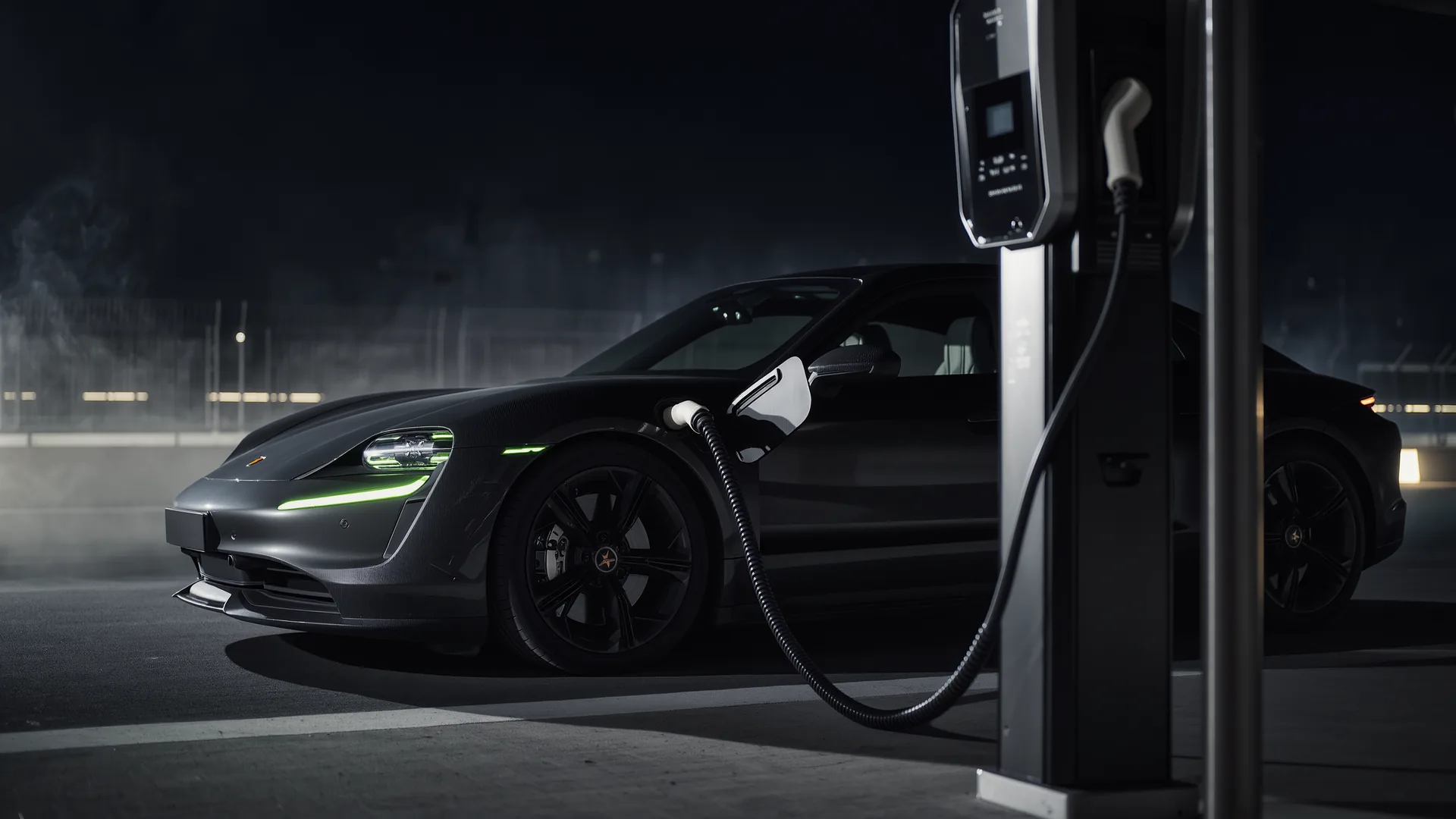
Peak charging power is a headline that exists for a few minutes at a specific state of charge and a specific temperature. Everything a track session does moves the pack away from all three: it empties the battery, heats it substantially, and leaves it needing a large amount of energy exactly when it is least able to accept it. The result is a duty cycle of 20 minutes of driving followed by a break considerably longer.
What the curve actually looks like
A fast charging session is not a constant. Power ramps up as the pack warms, holds near peak through a low and middle state of charge band, then tapers progressively as the pack fills. The taper is not a limitation of the charger, it is a property of the cells: as they approach full, the voltage difference driving charge into them shrinks, and pushing harder risks lithium plating.
| Condition | Effect on charge acceptance | Reason |
|---|---|---|
| Cold pack | Heavily reduced | High internal resistance, plating risk |
| In the window, low state of charge | Peak | The headline condition |
| Above roughly 60 to 80 per cent | Tapering | Diminishing voltage headroom |
| Near 100 per cent | Very low | Cell balancing and plating margin |
| Hot from hard driving | Reduced | Protecting cells from ageing |
| Hot and nearly full | Lowest of all | Both limits at once |
The bottom row is the track day condition, and it is the worst possible combination. The pack is hot from repeated full power events and needs a large fraction of its capacity, so it spends its time in the tapering region while the thermal limit is also active.
Charge acceptance falls before discharge power does
This is the detail that catches people out. A pack warmed by hard driving usually still delivers full discharge power, so the car feels fine. Its ability to accept charge has already been reduced, because charging generates further heat in a pack that is already near its limit and the control unit protects against that first.
So a driver comes off track with the car still feeling strong, plugs in, and finds the charging session slower than the same charge would have been after a gentle motorway run. Nothing is wrong. The two limits simply move at different rates.
The arithmetic of the day
Hard circuit driving consumes energy at several times the motorway rate, and motorway driving is already expensive: a constant 130 km/h costs around 40 per cent of range against gentler speeds. On track, with repeated full power acceleration and heavy braking, consumption is higher again, so a session of 15 to 25 minutes can consume most of a usable charge.
Then the wait begins, and it is not the wait the charging specification implies. The pack has to cool before it will accept charge at a useful rate, and its thermal mass of 500 to 800 kg means cooling takes far longer than heating did. Adding a charge that would take 25 minutes from a cool pack can take substantially longer from a hot one.
What actually helps
- Charge to a lower ceiling. Stopping at 80 per cent avoids the steepest part of the taper, and on track the top 20 per cent is the slowest energy you will ever add.
- Let the pack cool before charging rather than plugging in immediately. Counterintuitive, and often faster overall.
- Precondition before the first session, not after. Preconditioning places the pack in its window before it is needed and does nothing about heat the session itself generates.
- Shorter sessions. Two ten minute runs with a break generate less accumulated heat than one twenty minute run, for the same driving.
Questions readers ask
Why is fast charging slower after a hard drive?
Because charge acceptance falls before discharge power does. A pack warmed by hard driving still delivers full output while its ability to accept charge has already been reduced, since charging would add further heat to a pack near its thermal limit.
Why does charging slow down as the battery fills?
Because the voltage difference driving charge into the cells shrinks as they approach full, and pushing harder risks depositing metallic lithium on the anode. The taper typically begins somewhere between 60 and 80 per cent state of charge.
How long is a realistic track session?
Roughly 15 to 25 minutes before a usable charge is consumed. Circuit driving uses energy at several times the motorway rate, and a constant 130 km/h already costs around 40 per cent of range against gentler speeds.
Should I plug in immediately after a session?
Often not. A hot pack accepts charge slowly, so letting it cool first can produce a faster session overall. Its thermal mass of 500 to 800 kg means cooling takes considerably longer than heating did.
Does preconditioning help on a track day?
Before the first session, yes. It places the pack in its window so full power is available from the start. It does nothing about the heat the session itself generates, which is what limits everything after that.
Sources
- High speed autobahn range test, on the roughly 40 per cent range loss at sustained high speed, the floor for circuit consumption.
- Rimac Nevera performance records, on repeated full power events and the thermal management they require.
- WLTP range against reality, on temperature effects of 10 to 23 per cent, which share the same cell level cause.
- UNECE Regulation No. 85, on electric drivetrain measurement and the conditions under which figures are established.