Electric Performance
One Gear: Why Electric Top Speeds Stay Low
A motor limited to 18,000 rpm through a 9:1 reduction on a 2.15 m tyre reaches 258 km/h and stops. That arithmetic is why so many electric cars cluster around 250 km/h.
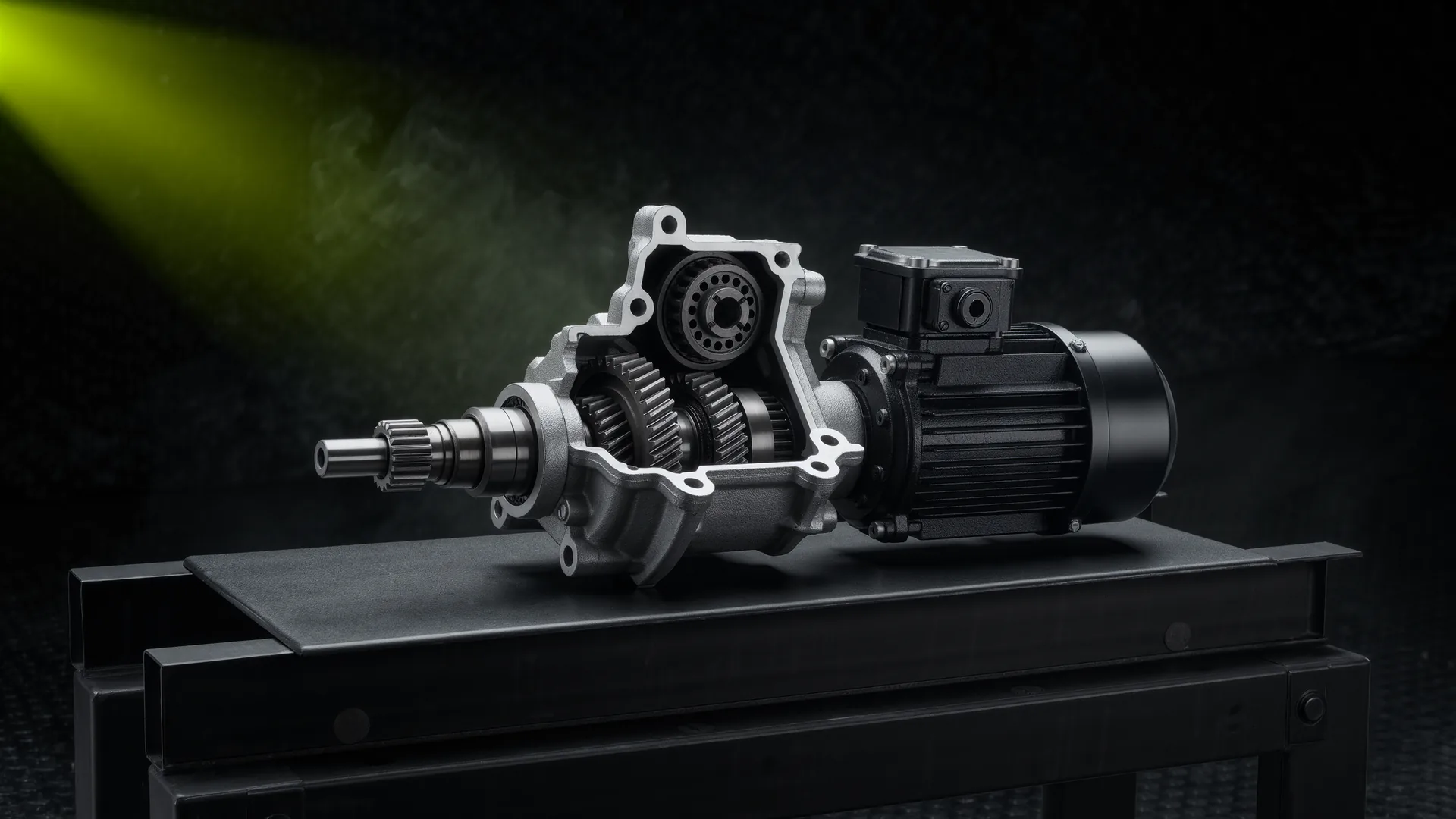
Most electric cars have one forward ratio, so their maximum speed is a division sum. A motor limited to 18,000 rpm through a 9:1 reduction turns the wheels at 2,000 rpm, and on a tyre of 2.15 m rolling circumference that is 258 km/h. There is no taller gear to select, so that is the end of it, regardless of how much power remains.
The calculation, and why it is so rigid
Wheel speed is motor speed divided by the reduction ratio, and road speed is wheel speed multiplied by rolling circumference. With only one ratio, every one of those terms is fixed at design time.
| Motor limit | Ratio 8:1 | Ratio 9:1 | Ratio 10:1 | Ratio 11:1 |
|---|---|---|---|---|
| 14,000 rpm | 226 km/h | 201 km/h | 181 km/h | 164 km/h |
| 16,000 rpm | 258 km/h | 229 km/h | 206 km/h | 188 km/h |
| 18,000 rpm | 290 km/h | 258 km/h | 232 km/h | 211 km/h |
| 20,000 rpm | 322 km/h | 287 km/h | 258 km/h | 235 km/h |
Read across a row and the trade becomes obvious. A shorter ratio, further right, multiplies torque at the wheels and gives a stronger launch, at the cost of top speed. A taller ratio, further left, gives more speed and less wheel torque. With one gear the designer picks a point on that line once, and every buyer lives with it.
Why they choose acceleration
The choice is not close. Acceleration figures sell cars, appear in every comparison and are used every day. Top speed above 250 km/h is legal on almost no public road and is used by almost nobody. Given one ratio, the rational decision is a shorter one, and that is what most manufacturers pick.
There is a second reason. Electric motors enter field weakening above their base speed, where torque falls while power flattens and then declines. A motor near its rpm limit is producing considerably less than peak power, so even a car geared for a higher maximum speed would arrive there with less to give than the specification sheet implies.
What a second gear buys
A two speed transmission resolves the conflict directly: a short first ratio for launch torque, a tall second for top speed and for efficient high speed cruising. The cost is a gearbox, a shift event and the control complexity of managing it without interrupting the seamlessness that makes electric acceleration distinctive.
The efficiency argument is often the stronger one. At motorway speed a single speed car may be running its motor well away from its most efficient operating point, and a taller second ratio lets it turn more slowly for the same road speed. Given that a constant 130 km/h already costs around 40 per cent of range, gains in that regime are worth more than they look.
Where the ceiling does not apply
Hypercars solve the problem with more motors and higher rotational limits rather than more gears. The Rimac Nevera reaches 412 km/h, 256 mph, and the Nevera R has recorded 431.45 km/h, 268.2 mph, as an electric top speed record. Those are single speed cars whose motors simply spin faster and whose reduction ratios are chosen accordingly, which shows the ceiling is an engineering choice at a price rather than a property of electric drive.
Questions readers ask
Why do most electric cars have a single speed gearbox?
Because an electric motor produces usable torque across a very wide speed range, so a gearbox is not needed to keep it in a power band. One ratio is lighter, simpler, cheaper and has no shift interruption, and the cost is a fixed maximum speed.
How is an electric car's top speed calculated?
Motor speed limit divided by the reduction ratio gives wheel speed, multiplied by rolling circumference gives road speed. At 18,000 rpm through 9:1 on a 2.15 m tyre that is 258 km/h, and with one gear there is nothing to select beyond it.
Why not just gear it taller?
Because a taller ratio reduces wheel torque and therefore acceleration, which is what buyers actually use and what appears in every comparison. With one ratio the designer chooses a single point on that trade, and acceleration usually wins.
What does a two speed transmission add?
A short first ratio for launch torque and a tall second for top speed and efficient cruising. The efficiency benefit is often the stronger argument, since a constant 130 km/h already costs around 40 per cent of range.
How do electric hypercars exceed 400 km/h then?
With more motors and higher rotational limits rather than more gears. The Rimac Nevera reaches 412 km/h and the Nevera R has recorded 431.45 km/h, both on single speed drivetrains with reduction ratios chosen for that purpose.
Sources
- Rimac Nevera R records, on the 431.45 km/h electric top speed figure.
- Rimac Nevera sets 23 performance records in a single day, on the 412 km/h top speed of the standard car.
- High speed autobahn range test, on the roughly 40 per cent range loss at a sustained 130 km/h.
- UNECE Regulation No. 85, on electric drivetrain power measurement including behaviour above base speed.
Speeds are calculated as motor rpm divided by ratio, multiplied by a 2.15 m rolling circumference. Motor speed limits and ratios are representative ranges rather than figures for a specific vehicle.