Lap Times
20.6 or 20.832 km: The Nordschleife Lap Length Problem
Records are now timed over the full 20.832 km. The older 20.6 km figure leaves out about 200 m at T13, so times measured on the two distances cannot be compared at all.
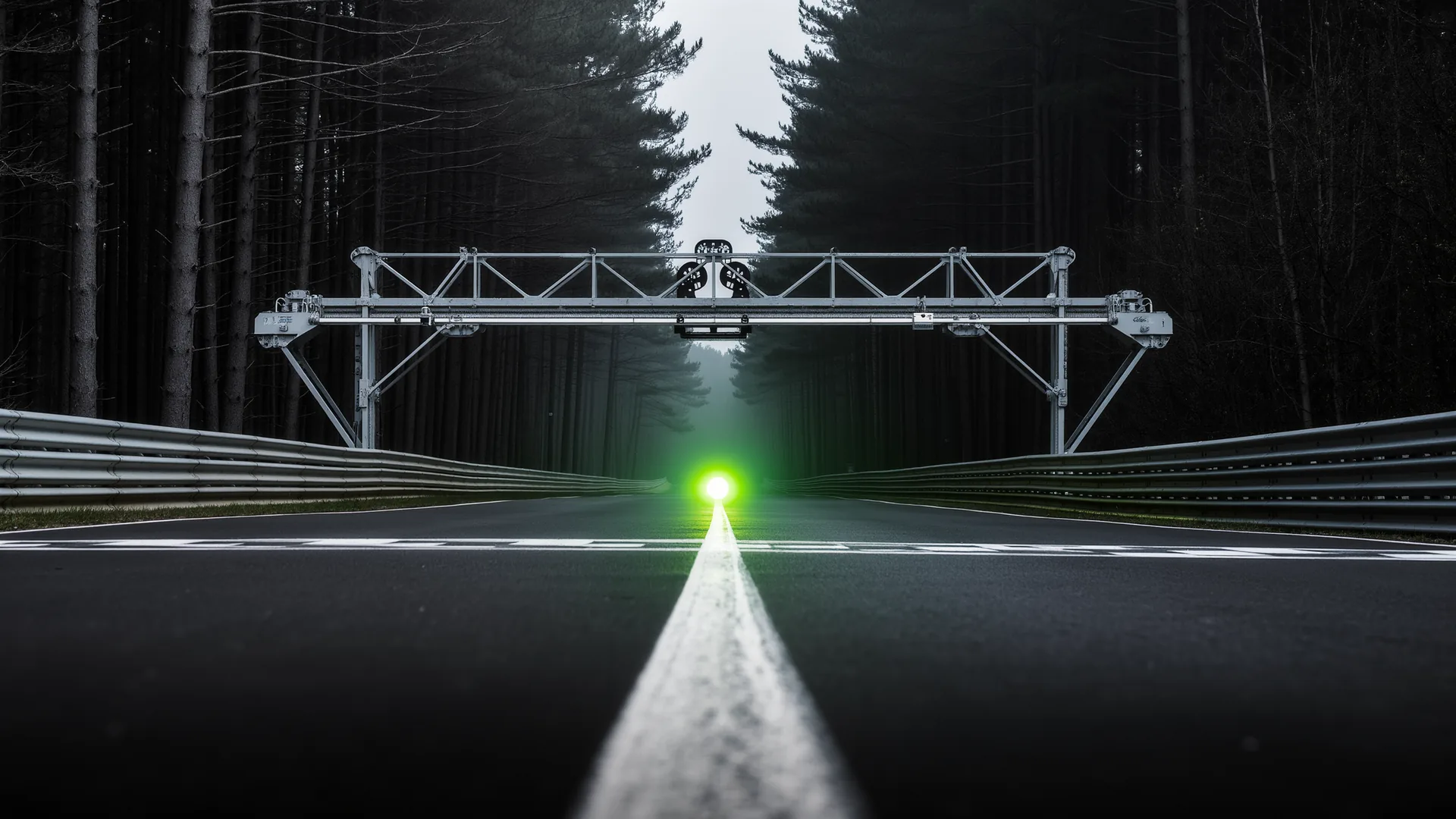
Two different lap distances are in circulation at the Nürburgring, and press releases rarely say which one they used. Official record laps are timed over the full 20.832 km from the start and finish line in section T13, with a flying start. The older and still widely quoted 20.6 km figure omits roughly 200 m at T13. Two times measured on those two distances describe different journeys and cannot be placed in the same table.
What the current rule says
Under the statutes of Nürburgring GmbH, a record attempt is timed over the complete Nordschleife distance of 20.832 km. The official start and finish line for record attempts sits in track section T13, and the lap is driven with a flying start, meaning the car crosses the line already at speed rather than accelerating from rest.
The earlier convention measured 20.6 km, leaving out about 200 m at T13 near the old public entrance to the track. Nothing improper happened under that convention, it was simply the reference in use. The problem is entirely historical: a large body of published times exists on each basis, and the difference is not disclosed in most secondary reporting.
How much time the difference is worth
Porsche's Panamera record attempt in 2020 makes the gap concrete, because the team reported both marks from a single lap. The car passed the 20.6 km point at 7:25.04 on its way to completing the full 20.832 km lap. The extra 232 m therefore appears as additional time on the same run.
| Reference | Distance | Status | What it excludes | Comparable with |
|---|---|---|---|---|
| Full lap | 20.832 km | Current official record distance | Nothing | Other 20.832 km times |
| Short lap | 20.6 km | Historical, still widely quoted | ≈200 m at T13 | Other 20.6 km times |
| Bridge to gantry | ≈20.6 km | Enthusiast and tourist convention | The T13 section | Other bridge to gantry times |
A useful sanity check: at an average speed of around 170 km/h, which is what a fast production car lap implies, 232 m takes about 4.9 s. That is far larger than the gaps that separate cars in most published rankings, so mixing the two references does not introduce noise, it rewrites the order.
Why so much confusion survives
- Tourist laps use a different reference again. Public sessions run from a car park entrance, and the enthusiast convention of timing from a bridge to a gantry produces roughly the 20.6 km distance. Those times are legitimate and belong to their own list.
- Archived records were set under the old rule. Anything from before the change is on the short distance unless restated, so a historical comparison has to convert or exclude.
- Press releases quote a time, not a distance. The distance is usually in the detail rather than the headline, and secondary coverage drops it.
- Both numbers look plausible. There is no way to tell from a time alone which reference produced it, which is why the distance has to be stated rather than inferred.
A working rule for comparing lap times
Treat the distance as part of the measurement, exactly as you would treat rollout in an acceleration figure. If a source does not state the distance, the time cannot be ranked against a time that does. If it states 20.6 km, keep it in a separate list rather than converting, because a linear conversion assumes the missing section is driven at the lap average and it is not.
The same discipline applies to the start type. A flying start and a standing start are different tests, and the official record procedure uses a flying start, so a standing start time is a third category again.
Questions readers ask
Why are Nürburgring lap times measured over different distances?
Because the reference changed. Record attempts are now timed over the full 20.832 km from the line in section T13, while the older and still widely quoted 20.6 km reference omits roughly 200 m at T13. A large body of published times exists on each basis.
How much time is the 232 m worth?
At an average of around 170 km/h, about 4.9 s. That is much larger than the margins separating cars in most published rankings, so mixing the two references changes the order rather than adding a little noise.
Which distance is official?
20.832 km. Under the statutes of Nürburgring GmbH, the lap time for a record attempt is measured over the complete Nordschleife distance from the official start and finish line in track section T13, driven with a flying start.
What is a bridge to gantry time?
An enthusiast convention that times from a bridge to a gantry, producing roughly the 20.6 km distance. It is widely used for tourist and private laps and is internally consistent, but it is not the official record reference and its times belong on a separate list.
Can I convert a 20.6 km time to a full lap time?
Not reliably. A linear conversion assumes the missing section is covered at the lap average speed, which it is not. Keep the two references in separate lists rather than attempting to convert between them.
Sources
- Nürburgring, record drives, on the 20.832 km distance, the T13 start and finish line and the flying start requirement.
- Porsche Newsroom, Panamera Nordschleife record, on the change from 20.6 km to 20.832 km and the 7:25.04 intermediate at the 20.6 km mark.
- Bridge to Gantry, on the enthusiast timing convention that gives the name to the shorter reference.