Lap Times
Power Tracks vs Downforce Tracks: Reading a Circuit
Downforce scales with the square of speed, so it is worth nine times as much in a 300 km/h corner as in a 100 km/h one. That single relationship sorts circuits into two families.
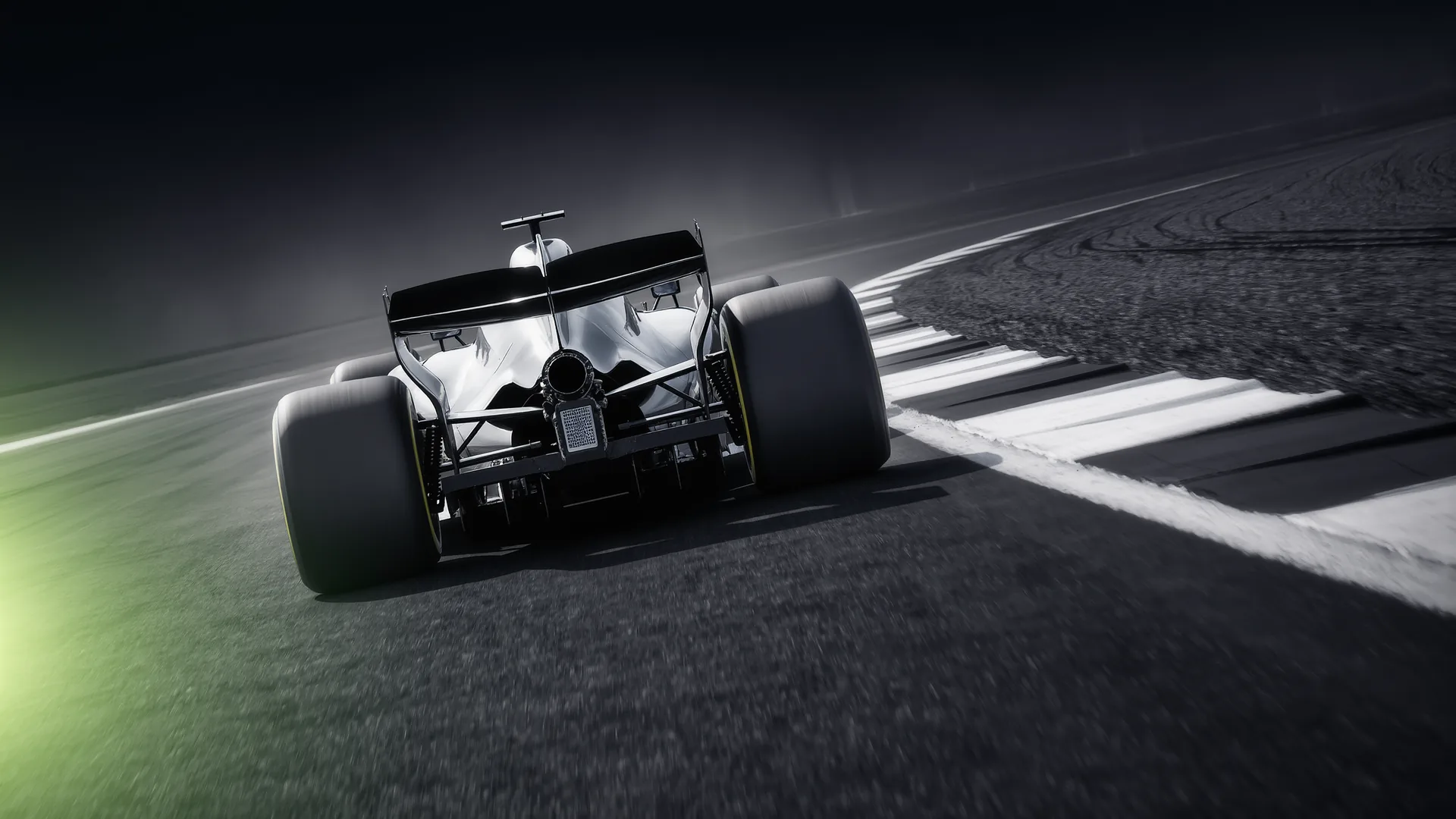
Circuits divide into two families and the dividing line is corner speed. Aerodynamic downforce scales with the square of speed, so a package producing 100 kg at 100 km/h gives 400 kg at 200 and 900 kg at 300. In a slow corner it contributes almost nothing while its drag is still being paid for on every straight. In a fast corner it is the dominant source of grip, and no amount of mechanical setup substitutes for it.
The scaling that sorts everything
| Corner speed | Downforce | Added to a 1,500 kg car | Grip increase from aero |
|---|---|---|---|
| 80 km/h | 64 kg | +4.3 % | Negligible |
| 120 km/h | 144 kg | +9.6 % | Noticeable |
| 180 km/h | 324 kg | +21.6 % | Significant |
| 240 km/h | 576 kg | +38.4 % | Dominant |
| 300 km/h | 900 kg | +60.0 % | The main source of grip |
A car set up for a circuit whose corners are taken at 80 to 120 km/h is carrying a wing that adds under ten per cent to its vertical load, while paying the drag penalty everywhere. On a circuit whose corners are taken at 240 km/h, the same wing adds nearly forty per cent, and removing it would cost several seconds a lap.
Where power matters instead
Power decides straight line performance, and its value depends on how much of the lap is spent at full throttle in a high gear. That is a property of layout: long straights connected by few corners reward power, and a circuit that never lets the car settle rewards it far less.
The catch is the cube law. Because the power needed to overcome drag scales with the cube of speed, a straight long enough to reach high speed converts extra power into very little extra terminal velocity. Going from 300 to 330 km/h at the end of a straight, a gain of ten per cent, requires about 33 per cent more power. Power is a blunt instrument on a circuit and a decisive one only where drag has not yet become dominant.
Why the setup cannot be optimised for both
Downforce and drag come from the same act of turning air, so they cannot be separated. A good racing wing has a lift to drag ratio of 3 to 5, meaning every 4 kg of downforce arrives with roughly 1 kg of added drag force, and that drag is being carried down every straight at a cost that scales with the cube of speed.
The result is a genuine optimisation with a single answer per circuit. A downforce level that is correct for a fast circuit is too high for a slow one, and vice versa, which is why teams change wing angle between venues and why road cars with active aerodynamics adopt one setting for a straight and another for a corner.
Reading a lap time through this lens
- A car strong at fast circuits and ordinary at slow ones is an aerodynamic car. Its advantage evaporates where the corners are slow, and it will look unremarkable in a low speed comparison.
- A car strong at slow circuits and ordinary at fast ones is a mechanical grip car: light, agile, probably on a very good tyre and without much aerodynamic load.
- A car strong everywhere has both, which usually means a large aerodynamic package and enough power to carry its drag.
- A car strong at one circuit only has been developed there, which is a legitimate engineering choice and a poor basis for a general ranking.
The Nordschleife as a hybrid case
The Nordschleife resists this classification because it is both at once. Its 20.832 km contain slow hairpins, very fast sweeps, substantial elevation change and a long straight, so a lap there samples the whole spectrum rather than testing one end of it. That is a large part of why it became the reference circuit: a car cannot be optimised for one section without losing time in another.
It also makes the lap unusually sensitive to the driver. Roughly 70 corners means seventy opportunities to be a tenth off, which totals seven seconds, so a Nordschleife time carries more information about the car and more noise from everything else than a short circuit time does.
Questions readers ask
Why does one car win at Monza and lose at a tight circuit?
Because downforce scales with the square of speed. A package worth 100 kg at 100 km/h gives 900 kg at 300 km/h, so an aerodynamic car is transformed in fast corners and unremarkable in slow ones, where it is still paying the drag penalty on every straight.
What is a power circuit?
One with long straights connected by few corners, where much of the lap is spent at full throttle. Even there the cube law limits what power buys: going from 300 to 330 km/h at the end of a straight requires about 33 per cent more power for a ten per cent gain.
Why can a setup not have downforce without drag?
Because downforce is produced by turning air, and turning air removes momentum from it, which is drag. A good wing has a lift to drag ratio of 3 to 5, so every 4 kg of downforce brings about 1 kg of drag force, carried down every straight at a cost scaling with the cube of speed.
How do I tell what kind of car I am looking at?
By the pattern across circuits rather than one time. Strong at fast circuits and ordinary at slow ones means an aerodynamic car. The reverse means mechanical grip, low mass and a good tyre. Strong at only one circuit usually means it was developed there.
Which type is the Nordschleife?
Both. Its 20.832 km include slow hairpins, very fast sweeps, large elevation changes and a long straight, so a car cannot be optimised for one section without giving time back in another. That breadth is why it became the reference circuit.
Sources
- Nürburgring, record drives, on the 20.832 km lap and the record procedure applied to it.
- Vehicle Physics Pro, tyre model documentation, on how added vertical load translates into available grip.
- Bugatti Newsroom, breaking the 300 mph barrier, on the low drag configuration adopted where downforce has no value.
Downforce figures assume a fixed package producing 100 kg at 100 km/h scaling with the square of speed, applied to a 1,500 kg car. Grip does not rise exactly in proportion to load, because tyre friction falls slightly as vertical load increases.