Lap Times
What Counts as a Production Car for a Record
There is no single definition. The Nürburgring exempts prototypes from production scrutineering entirely, so the phrase in a headline is usually doing more work than the rules behind it.
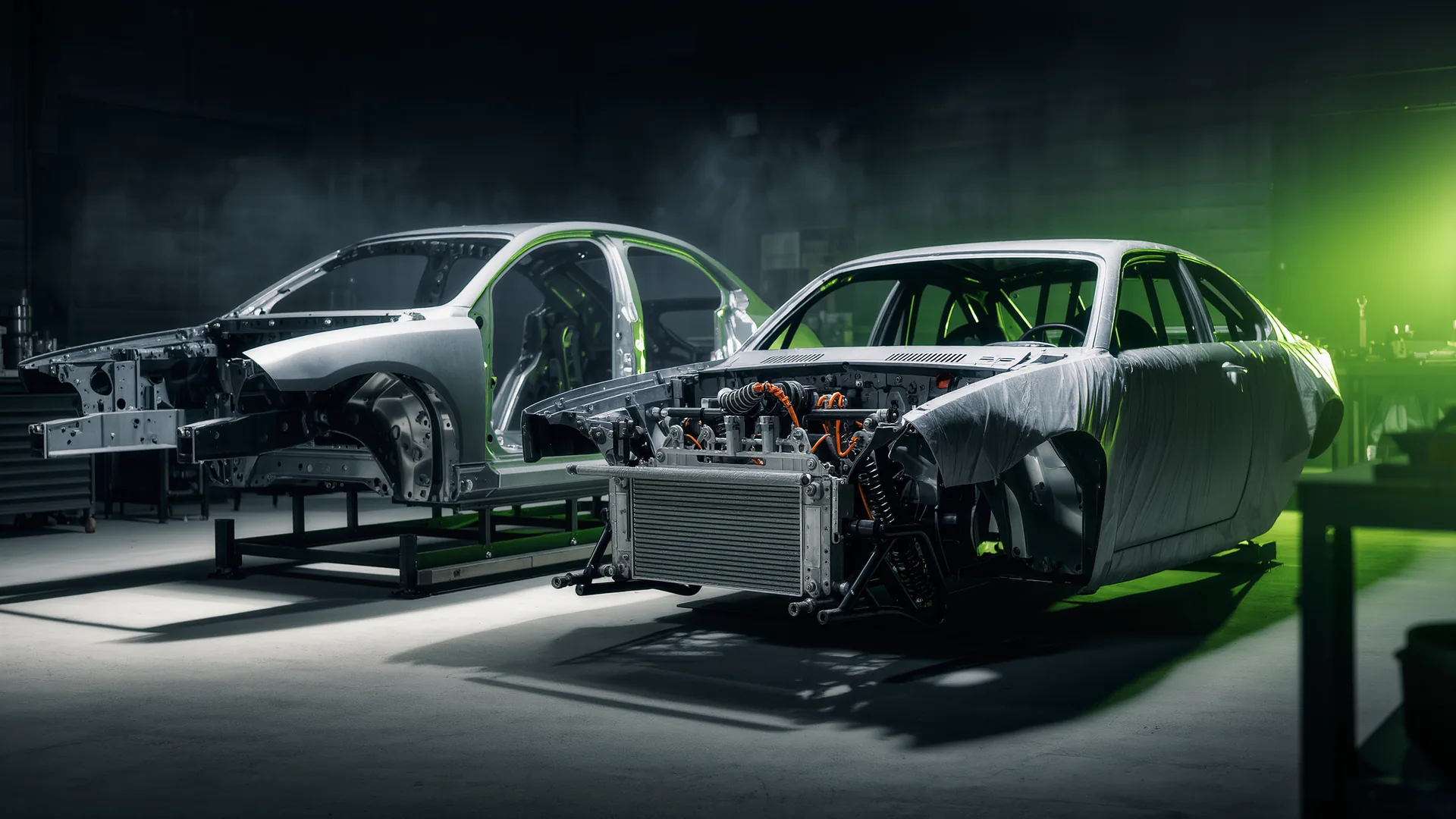
No universal definition of a production car exists for record purposes, and the differences between the working ones decide who holds what. Nürburgring procedure documents standard condition through a neutral testing organisation, but explicitly states that this scrutineering is not required for racing cars, special vehicles, prototypes and concept cars. Bugatti's 490.484 km/h pass was made by a modified pre-production car and was never presented as a production record. The phrase in a headline is usually stronger than the rule behind it.
The four tests that get applied
| Test | What it asks | Weakness |
|---|---|---|
| Road legality | Is it type approved and registrable? | A run of two cars can be type approved |
| Minimum production run | Were enough built? | The threshold is arbitrary and varies by body |
| Customer availability | Can a member of the public buy one? | Allocation lists make this hard to test |
| Standard specification | Is the record car as delivered? | Options, including tyres, shift it substantially |
Each test excludes something the others allow. Road legality alone permits a two car run. A production minimum alone permits a car nobody outside a list can buy. Customer availability alone permits extensive optional equipment. Standard specification is the strictest, and it is the one the Nürburgring applies through documentation of standard condition, in the categories where it applies at all.
The exemption in the Nürburgring rules
The rules are explicit: scrutineering regarding a vehicle's series-production state is not required for racing cars, special vehicles and prototypes or concept cars. That is logically necessary, since a prototype has no series-production state to check against, and the Nürburgring classifies cars by the official categories of the German Federal Motor Transport Authority so that like is compared with like.
The gap opens in reporting rather than in the rules. A supervised, notarised, calibrated lap by a prototype is a legitimate record in its own category, and it becomes a false claim only when a headline moves it into a different one. The correct question about any lap record is not whether it was verified but which category it was verified in.
The same problem in top speed records
Top speed records show the pattern even more clearly, because the three best known modern claims sit in three different categories.
- Koenigsegg Agera RS, 2017. 447.19 km/h two way average, a customer specification car, on a closed public road. The cleanest production claim of the three.
- Bugatti Chiron Super Sport 300+, 2019. 490.484 km/h in one direction, a modified pre-production car with reshaped bodywork, certified by an independent testing organisation. Bugatti described it accurately and secondary coverage frequently did not.
- SSC Tuatara, 2021. 282.9 mph, 455.3 km/h two way average with equipment installed and certified on site, after an earlier claim of 316.11 mph was withdrawn. Verified, and a reminder that the verifier matters as much as the category.
How to read a claim in one pass
Four questions settle almost any record dispute, and all four have answers in the original announcement even when they are missing from the coverage.
- Which category was it verified in? Series production, special vehicle, prototype or racing car.
- Was the specification independently documented? If the category is exempt, the answer is no, and that is disclosed rather than hidden.
- Could a customer buy this configuration? Including the tyres and any aerodynamic parts fitted.
- Who verified it, and were they present? A notary, a named testing organisation or a measurement specialist on site.
Where the honest benchmark sits
For the Nordschleife, the fastest street legal production car lap is 6:29.090, set on 23 August 2024 over the full 20.832 km. Faster laps exist, and they belong to categories that carry a different verification burden. Both statements are true at the same time, and a table that mixes them is not a ranking of anything.
Questions readers ask
What rules decide whether a car counts as production?
There is no universal definition. Four tests are used in practice: road legality, a minimum production run, customer availability and standard specification. Each excludes something the others allow, which is why different record bodies reach different answers about the same car.
Does the Nürburgring check that a record car is standard?
For the categories where it applies, yes: a neutral testing organisation documents the car's standard condition. The rules explicitly exempt racing cars, special vehicles, prototypes and concept cars from that scrutineering, because a prototype has no series-production state to verify against.
Was the Bugatti 490 km/h run a production record?
No, and Bugatti did not present it as one. It was a single direction pass by a modified pre-production car with reshaped bodywork, recorded by a sealed GPS box and certified by an independent testing organisation. It is a milestone in its own category.
Which top speed record is the cleanest production claim?
The Koenigsegg Agera RS at 447.19 km/h in 2017, because it was a two way average set by a customer specification car. The two individual passes, 284.55 and 271.19 mph, were published alongside it.
Do optional parts disqualify a record?
Not if they are homologated factory options and the specification is documented. They do change what the record means, particularly tyres, which are worth several seconds over a full Nordschleife lap, so the specification belongs in the announcement rather than in a footnote.
Sources
- Nürburgring, record drives, on documentation of standard condition, the scrutineering exemption and KBA classification.
- Bugatti Newsroom, breaking the 300 mph barrier, on the single direction pass, the modified pre-production car and its certification.
- Koenigsegg Agera RS speed records, on the two way average and the individual passes.
- Fastest Nürburgring lap times, on the street legal production benchmark of 6:29.090.