Lap Times
The Tyre Delta: The Biggest Number in Any Lap Time
A track focused tyre is worth more lap time than most engine upgrades, and it fades. Michelin measured 2.9 s per lap over a 6.277 km reference, with most of the gain on lap one.
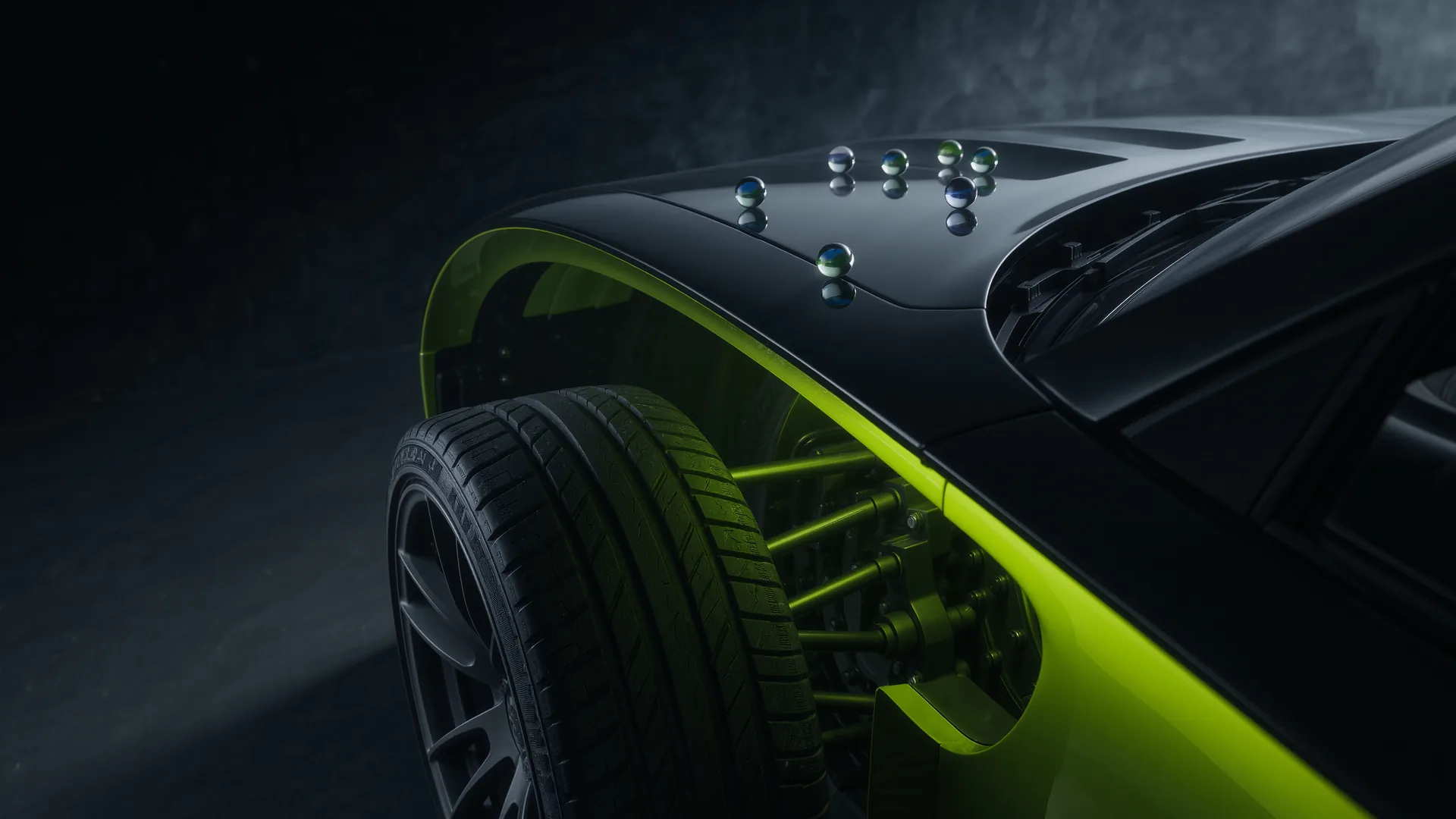
Tyre choice moves a lap time more than almost anything else a manufacturer can specify, and it is the variable most often left out of a record announcement. In a Michelin internal test on a Porsche 911 GT2 RS, the track focused Cup 2 R was 2.9 s per lap quicker than the Cup 2 over a 6.277 km reference. The more interesting part is how that gain behaved: nearly two seconds on the first lap, falling to under one second per lap afterwards.
Why the tyre outweighs the engine
Around a circuit, most of the lap is spent either cornering, braking or accelerating out of a corner, and all three are limited by the friction coefficient between rubber and road rather than by engine output. Published friction values run from about 0.7 to 1.0 for treaded street tyres, around 1.3 for historic racing tyres and 1.5 to 2.0 for slicks on dry asphalt. That is close to a factor of two, and no engine change offers a lever of that size.
An engine upgrade helps only where the car is power limited, which on the Nordschleife is a minority of the lap. A grip upgrade helps in every corner, on every brake application and out of every exit, which is why a tyre change can be worth more than a substantial power increase on the same car.
The part nobody quotes: it does not last
The Michelin comparison is unusually honest because it reports the shape of the gain rather than only its peak. A soft, track focused compound delivers most of its advantage while it is fresh and at ideal temperature, and it gives a large share of that back as the session continues.
| Measure | Advantage of the track tyre | What it reflects |
|---|---|---|
| Best lap, headline figure | 2.9 s per lap | Peak grip, ideal conditions |
| First lap | almost 2 s | Fresh compound at temperature |
| Subsequent laps | under 1 s | Compound degradation and heat build-up |
Scaling the headline figure to the Nordschleife's full 20.832 km gives roughly 9.6 s, though that is an extrapolation rather than a measurement and it inherits the same problem: it is a best lap figure, and a best lap is precisely what a record attempt produces. That is not a criticism of record attempts, it is a description of what the number means.
Why this matters for reading a record
Nürburgring record procedure requires that a car's standard condition is documented by a neutral testing organisation, for the categories where that applies. Standard condition includes the tyres, and a homologated track focused tyre offered as a factory option is legitimately part of the car. A record set on such a tyre is a real record.
It is also a different claim from a record set on the standard road tyre, and the difference is worth several seconds. When a record announcement documents the car's condition but does not name the tyre, the most consequential specification detail has been left out of the headline.
What the fast tyre costs the rest of the time
- Wet performance. Track focused compounds with reduced tread void clear standing water far less effectively. The EU tyre label wet grip scale, measured in a braking test from 80 km/h, exists precisely to make this visible, and a class step is worth roughly 3 to 6 m of stopping distance.
- Cold performance. Below roughly 10 °C surface temperature a soft summer compound sits outside its window, and grip losses of 15 to 25 per cent against the same tyre warm are ordinary.
- Life. The compound that generates the extra grip is the compound that wears away producing it. A track tyre delivering its advantage through a soft surface layer is consuming that layer as it works.
- Rolling resistance. Under Regulation (EU) 2020/740 the class A threshold for passenger car tyres is a coefficient of 6.5 N/kN or below, while class E starts at 10.6. Performance compounds rarely sit near the top of that scale.
Questions readers ask
How much lap time does a track tyre gain?
In a Michelin internal test on a Porsche 911 GT2 RS, the Cup 2 R was 2.9 s per lap quicker than the Cup 2 over a 6.277 km reference. Nearly two seconds of that came on the first lap, with under a second per lap remaining afterwards.
Why does the advantage fade?
Because a soft compound produces its extra grip through a surface layer that degrades as it works, and because heat accumulates in the tyre over a session. The headline figure is a best lap number, which is exactly what a record attempt is designed to produce.
Is a record set on track tyres legitimate?
Yes, provided the tyre is a homologated factory option and the car's standard condition was documented, as Nürburgring procedure requires for the applicable categories. It is a different claim from a record on the standard road tyre, which is why the tyre should be named.
Why do tyres matter more than power on a circuit?
Because most of a lap is spent cornering, braking or accelerating out of a corner, and all three are limited by friction rather than engine output. Friction coefficients range from about 0.7 for street tyres to 2.0 for slicks, a factor of nearly three that no engine change can match.
What does a track tyre cost in normal use?
Wet performance, cold performance, life and efficiency. Reduced tread void clears water less well, soft compounds sit outside their window below about 10 °C, the grip generating layer wears as it works, and rolling resistance is higher, which the EU label makes visible on a scale from 6.5 to above 10.6 N/kN.
Sources
- Michelin Cup 2 R against Cup 2, on the 2.9 s per lap figure, the 6.277 km reference and the fall from almost two seconds on lap one to under one second afterwards.
- Autosport technical forum, tyre coefficient of friction, on measured friction values for street, historic racing and slick tyres.
- Regulation (EU) 2020/740, Annex I, on the rolling resistance and wet grip class thresholds for passenger car tyres.
- Nürburgring, record drives, on the documentation of a record car's standard condition.
The 20.832 km scaling is an extrapolation from the published 6.277 km figure and is presented as an order of magnitude estimate rather than a measured result.