Top Speed
Why So Many Cars Stop at 250 km/h
The 155 mph limit is not a law and not an engineering limit. It is an informal agreement between BMW, Audi and Mercedes to head off an autobahn speed limit, and Porsche never joined it.
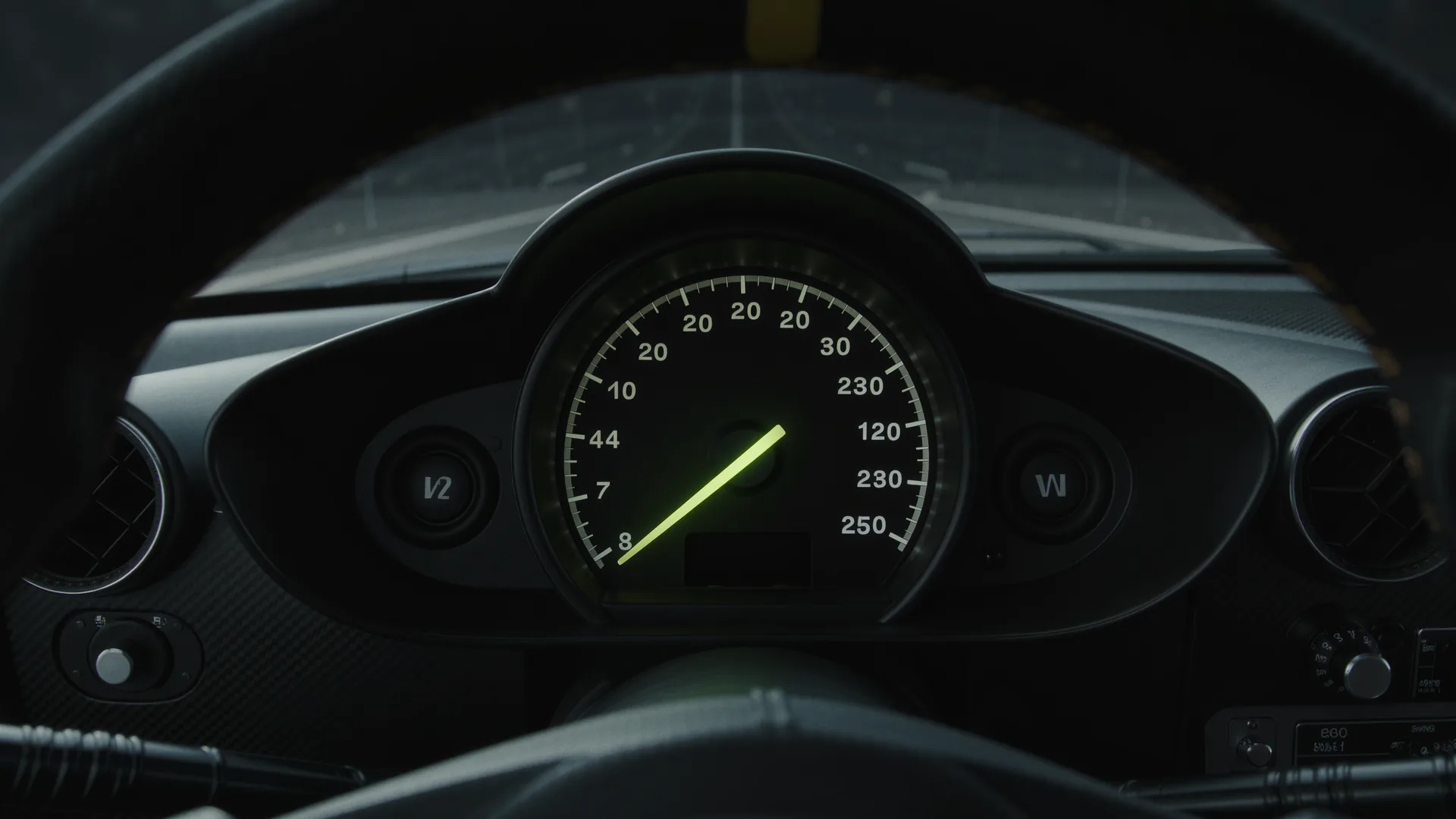
The 250 km/h, 155 mph ceiling on so many German cars is neither a regulation nor a mechanical limit. It is an informal agreement adopted by BMW, Audi and Mercedes-Benz decades ago, intended to head off political pressure for a general autobahn speed limit. It has no legal force, there is no penalty for leaving it, and Porsche never joined. Understanding that it is a policy rather than a capability changes how you read a specification sheet.
A political agreement, not a technical one
Germany's autobahn network has long carried sections without a general speed limit, and that has been politically contested for as long as it has existed. Manufacturers had an obvious interest in the network staying open, and a visible act of self-restraint was cheaper than a legislated cap. Limiting mainstream models to 250 km/h was that act.
The arrangement has held for more than forty years across mainstream ranges, and it is honoured in a specific way that matters: it applies to volume models, while limited-run performance versions from the same manufacturers routinely go past it. Audi, BMW and Mercedes all build cars that exceed 250 km/h. The agreement was never a promise that no fast car would exist, only that the ordinary ones would be capped.
What the limit does to the rest of the car
Once a car is limited well below its aerodynamic potential, several design decisions follow, and they are the reason a delimited car often disappoints.
| Component | Chosen for | What it costs above 250 km/h |
|---|---|---|
| Final drive and top gear | Low cruising revs, consumption, emissions | Engine may be off peak power at the ceiling |
| Tyres | W rating, 270 km/h, is sufficient | Hard limit close above the electronic one |
| Cooling | Sustained 250 km/h, not 300 | Oil and coolant temperature rise quickly |
| Aerodynamic balance | Stability to the limiter | Front lift can grow beyond the tested range |
| Brakes | Repeated stops from 250 km/h | Energy scales with the square of speed |
The tyre row is the sharpest one. A car limited to 250 km/h is frequently delivered on W rated tyres, certified to 270 km/h. Removing the electronic limit from such a car leaves only 20 km/h of margin before the tyre itself is outside its certification, which is not a margin at all.
Why removing it rarely gives what people expect
A delimited car does not become the car it would have been without the agreement. It becomes a car designed for 250 km/h that is now allowed to keep going. Gearing chosen for a low cruising engine speed means the engine may be past peak power at the point where drag catches it. Cooling sized for one duty cycle is being asked for another. And the brakes now face stops from a speed at which kinetic energy is substantially higher, since energy scales with the square of speed: a stop from 300 km/h dissipates 44 per cent more energy than one from 250.
There are also consequences outside the car. Type approval covers the vehicle as delivered, and altering the maximum speed can affect that approval, the insurance contract and the manufacturer's warranty position. None of that is a physics argument, and all of it is real.
Reading a limited specification honestly
When a specification says 250 km/h (limited), it is telling you almost nothing about the car's aerodynamic or power potential. Two cars sharing that figure can be a hundred kilometres per hour apart in reality. The informative numbers on such a car are elsewhere.
- The 100 to 200 km/h time, which sits entirely below the limiter and reflects power against weight and drag.
- The tyre rating fitted as standard, which reveals what speed band the car was actually engineered around.
- Whether an optional higher limit exists, and what it requires. A manufacturer offering 280 or 300 km/h with a specific tyre and brake package is telling you where the real constraint sat.
Questions readers ask
Is the 250 km/h limit a law?
No. It is an informal agreement adopted by BMW, Audi and Mercedes-Benz, intended to reduce political pressure for a general autobahn speed limit. No legislation requires it, no penalty attaches to leaving it, and Porsche never joined.
Why 250 km/h specifically?
It was chosen in the late 1980s and early 1990s as a round, defensible figure comfortably above ordinary driving and below what the fastest cars of the day could reach. 250 km/h is 155 mph, which is why the same cap appears as a 155 mph figure in English language specifications.
How fast would a limited car go without the limiter?
It varies enormously, which is the point: the limiter conceals the real figure. The binding constraint is often the tyre rather than the engine, because a 250 km/h car is frequently delivered on W rated tyres certified only to 270 km/h.
Is removing the limiter safe?
The car was engineered for a different duty. Gearing, cooling, aerodynamic balance and brakes were all sized around 250 km/h, and the fitted tyres may be certified only 20 km/h above it. Removing the limit also affects type approval, insurance and warranty position.
Do all German cars carry the limit?
No. It applies to mainstream models from the three manufacturers who adopted it. All three build limited-run performance versions that exceed it, and Porsche was never part of the arrangement at all.
Sources
- The curious case of the 250 kph speed limiter, on the origin of the agreement, its participants and its purpose.
- Speed limits in Germany, on the regulatory background against which the agreement was made.
- Goodyear, tyre speed rating chart, on the W and Y ratings referenced in the tyre margin discussion.
Braking energy comparison uses kinetic energy proportional to the square of speed: a stop from 300 km/h dissipates 1.44 times the energy of a stop from 250 km/h.