Top Speed
The Two Way Average: The Rule That Makes a Record Real
The Agera RS ran 284.55 mph one way and 271.19 mph the other on the same closed road. That 13 mph spread is why a single direction figure proves nothing about a car.
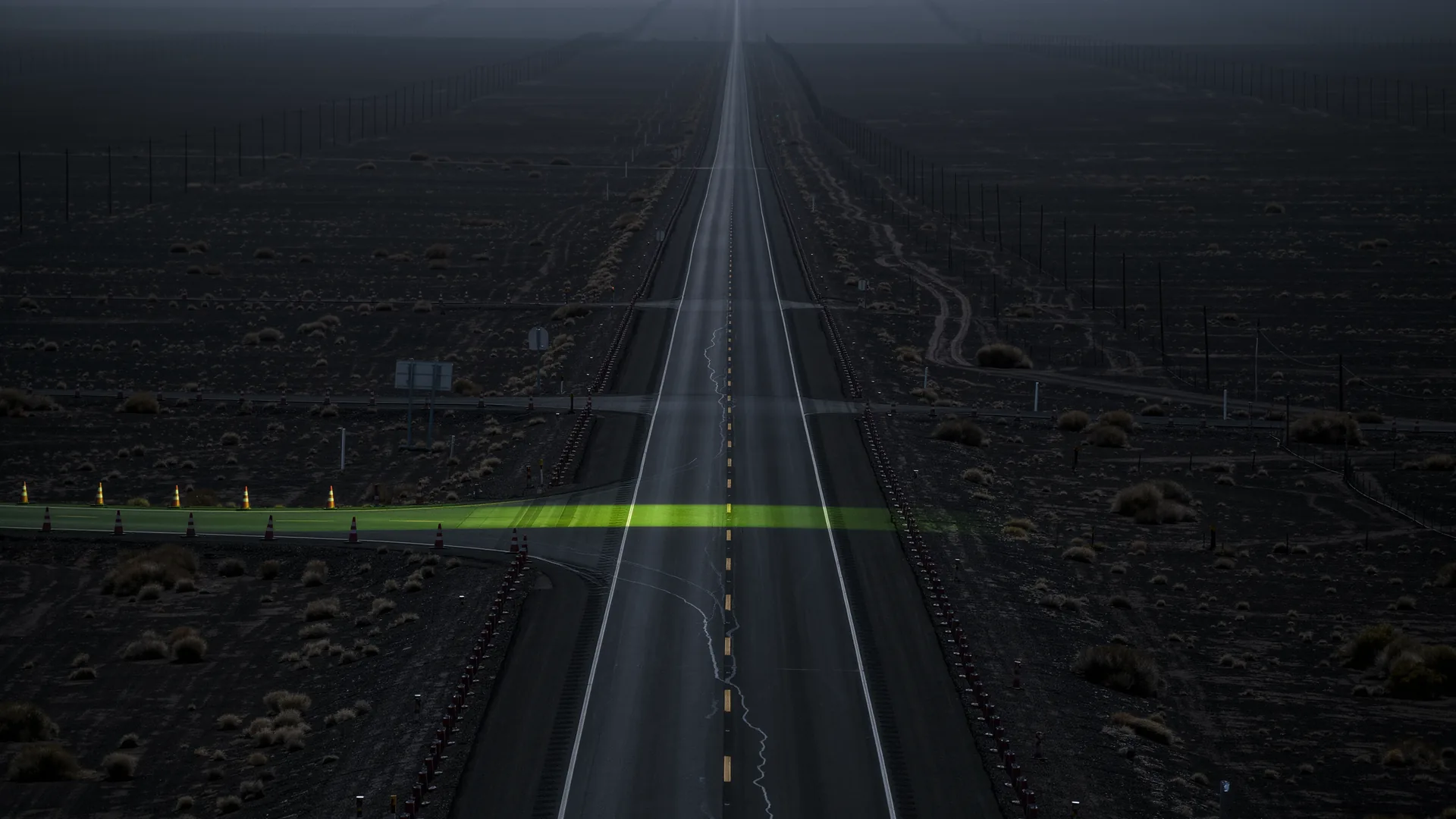
A top speed record is the average of two runs in opposite directions, because a single pass measures the wind and the road gradient as much as the car. The clearest published proof is Koenigsegg's 2017 record: the same car on the same closed road ran 284.55 mph in one direction and 271.19 mph in the other. The two way average, 277.87 mph, 447.19 km/h, is the number that means something.
Why one direction cannot be trusted
Three things sit inside a one way figure that have nothing to do with the car. A tailwind adds directly to the speed the car achieves relative to the ground while doing nothing to reduce the aerodynamic work it performs, because drag depends on airspeed rather than ground speed. A downhill gradient converts potential energy into speed. And any road with a slope in one direction has the opposite slope in the other, so a single pass always samples one of them.
Running both ways and averaging cancels the first two almost exactly, because a wind that helps one pass hurts the other by a comparable amount. It is a crude correction rather than an elegant one, and it works.
The 2017 run that demonstrated the point
Koenigsegg took an Agera RS to a closed section of Nevada State Route 160 in November 2017 and set a production car record with a two way average of 447.19 km/h, 277.87 mph. The individual passes were the interesting part.
| Pass | Speed | Conditions noted | Deviation from average |
|---|---|---|---|
| Direction one | 284.55 mph | Favourable | +6.68 mph |
| Direction two | 271.19 mph | Uphill gradient, headwind | −6.68 mph |
| Two way average | 277.87 mph | 447.19 km/h | the record |
The spread between passes was 13.36 mph, 21.5 km/h, or roughly 4.8 per cent of the average. A manufacturer quoting only the favourable direction would have claimed a figure 2.4 per cent higher than the car deserved, on a public road, in a single afternoon. Nothing about that requires bad faith, only a choice about which number to publish.
What happens without independent verification
The counterexample arrived three years later. In October 2020, SSC announced a two way average of 316.11 mph for its Tuatara, from passes of 301.07 and 331.15 mph. The claim was roughly 20 per cent faster than the standing record, which was itself a warning sign.
The video and the GPS data did not agree, the GPS supplier publicly declined to support the figure, and SSC withdrew the claim. The company returned in January 2021 with equipment set up and calibrated on site by an independent measurement specialist, and recorded a verified two way average of 282.9 mph, 455.3 km/h. The verified figure was 33.2 mph below the withdrawn one, a gap of more than 10 per cent.
The episode is the standard reference for why the identity of the verifier belongs in the headline. Two way averaging fixes the physics. It does nothing about the instrumentation.
What a credible record claim contains
- Two runs in opposite directions, with both individual speeds published alongside the average. If the separate passes are withheld, the spread is being hidden.
- A named independent verifier who was physically present, with the measurement equipment fitted and calibrated by them rather than by the manufacturer.
- A stated time window between the two passes. A pair of runs hours apart samples different wind conditions and the averaging stops working.
- The venue and its gradient. A closed public road, a proving ground and a salt flat are three different tests, and altitude changes air density and therefore both drag and engine output.
- A specification statement saying what the car was, since a modified prototype and a customer car are different claims. The Bugatti run to 490.484 km/h in 2019 was a one direction pass by a modified pre-production car, and Bugatti described it as exactly that rather than as a production record.
Questions readers ask
Why do top speed records have to be driven in both directions?
To cancel wind and road gradient. Drag depends on airspeed while the record measures ground speed, so a tailwind flatters a run without the car working any harder. Averaging two opposite passes removes most of that effect, which single direction figures cannot do.
How much difference does direction actually make?
On the Koenigsegg Agera RS record in 2017, 13.36 mph, or 21.5 km/h, between the two passes on the same closed road within the same session. That is 4.8 per cent of the average, and publishing only the favourable pass would have overstated the car by 2.4 per cent.
Is the Bugatti 490 km/h run a record?
Bugatti did not present it as a production car record. It was a single direction pass at 490.484 km/h on 2 August 2019 at Ehra-Lessien, in a modified pre-production car, recorded by a sealed GPS box and certified by an independent testing organisation. It is a milestone rather than a two way record.
What went wrong with the SSC Tuatara claim?
The October 2020 claim of a 316.11 mph two way average was withdrawn after the video and GPS data failed to agree and the GPS supplier declined to support it. A repeat run in January 2021, with equipment installed and certified on site by an independent specialist, produced 282.9 mph, more than 10 per cent below the original claim.
Why should the individual passes be published?
Because the spread between them is a quality indicator. A small spread suggests calm conditions and a level road, a large one suggests the average is doing heavy lifting. An average published without its two components cannot be assessed at all.
Sources
- Koenigsegg Agera RS speed records, on the 447.19 km/h two way average and the individual passes of 284.55 and 271.19 mph.
- SSC Tuatara retakes the record, on the withdrawn 316.11 mph claim and the verified 282.9 mph two way average of January 2021.
- Bugatti Newsroom, breaking the 300 mph barrier, on the single direction 490.484 km/h run and its certification.