Top Speed
Tyre Speed Ratings: The Real Ceiling on Top Speed
H is 210 km/h, V is 240, W is 270 and Y is 300. Above that the rating goes in brackets. The letter is a certified limit at rated load, and it often arrives before the engine does.
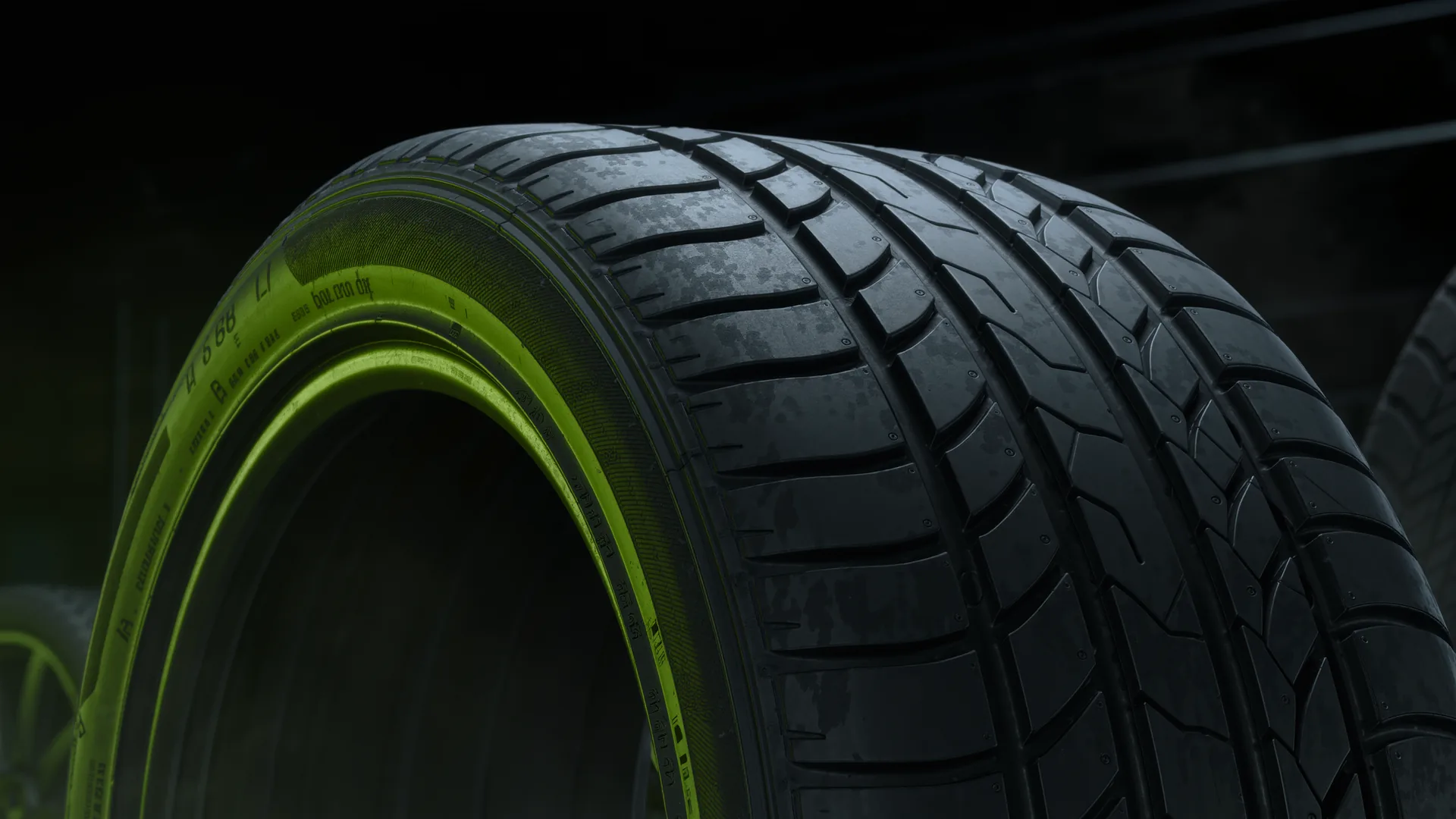
The letter at the end of a tyre size is a certified maximum sustained speed at the tyre's rated load. H is 210 km/h, V is 240, W is 270 and Y is 300. Above 300 the code is written in brackets as (Y). On a great many fast cars the tyre reaches its rating before the engine reaches its limit, which is why the speed limiter is often set by the rubber rather than by the powertrain.
The letters, and what they certify
| Code | Maximum sustained speed | In mph | Where it turns up |
|---|---|---|---|
| H | 210 km/h | 130 mph | Touring and all season tyres |
| V | 240 km/h | 149 mph | Fast saloons and hot hatchbacks |
| W | 270 km/h | 168 mph | Sports cars, common on 250 km/h limited cars |
| Y | 300 km/h | 186 mph | Supercars and unlimited fast saloons |
| (Y) | above 300 km/h | above 186 mph | Hypercars, rating certified individually |
| ZR | above 240 km/h | above 149 mph | A size marking, never a rating on its own |
The ZR row is the one that causes confusion. ZR is not a speed rating, it is a marking in the tyre size indicating a tyre suited to sustained speeds above 240 km/h, and it is always accompanied by a proper rating letter. A tyre marked 245/35 ZR20 (99Y) is a Y rated tyre. The ZR by itself tells you nothing precise.
What the rating is measured under
These are laboratory figures, established on a test drum under controlled conditions at the tyre's rated load. Three consequences follow, and all three are routinely ignored.
- The rating applies at rated load. Load index and speed rating are certified as a pair, which is why they are printed together in brackets. Overload the tyre and the speed rating no longer describes it, so load index matters as much as the letter on a heavy car.
- It assumes correct inflation. An underinflated tyre at high speed flexes more, runs hotter and can develop a standing wave in the tread that destroys it quickly. Manufacturers publish raised pressures for sustained high speed use for exactly this reason.
- It assumes a sound tyre. Age, repairs, kerb damage and heat cycling all reduce what a carcass will survive, and none of them is visible in the marking.
Why the tyre often sets the limiter
A manufacturer has to give a car a top speed it can sustain safely on the tyres it leaves the factory with. When the available tyre in the required size and load index is W rated, the car is limited at or below 270 km/h regardless of what the engine could do. This is a common and rarely stated reason for an electronic limit, and it is why some cars carry a higher limit only when specified with a particular tyre.
It also explains a practical trap. Fitting a tyre rated below the vehicle's specified minimum can breach the car's type approval condition and, in several European jurisdictions, affect insurance cover. The car has no way of knowing what is fitted, so the limiter does not move down to protect it.
What actually fails, and why speed is the trigger
At high speed a tyre is destroyed by heat and centrifugal load, not by friction with the road. Every revolution the carcass deforms as it enters and leaves the contact patch, and that deformation generates heat internally through hysteresis. Heat generation rises with rotational speed while the tyre's ability to shed it does not, so temperature climbs until the bond between rubber and belt weakens.
At the same time, centrifugal force tries to lift the tread away from the carcass, and it grows with the square of rotational speed. A tyre at 300 km/h carries 2.25 times the centrifugal loading it sees at 200 km/h. The two mechanisms together are why very high speed failures are sudden and complete rather than gradual, and why record attempts inspect or replace tyres between passes.
Reading a sidewall properly
A marking such as 255/35 ZR19 (96Y) decomposes into a section width of 255 mm, an aspect ratio of 35 per cent, a Z size marking, a rim diameter of 19 inches, a load index of 96 which is 710 kg per tyre, and a Y speed rating of 300 km/h. The load index and the speed rating appear together in brackets because they were certified together, and quoting one without the other is meaningless.
Questions readers ask
What do the tyre speed rating letters mean?
They certify a maximum sustained speed at the tyre's rated load: H is 210 km/h, V is 240, W is 270 and Y is 300. Ratings above 300 km/h are written in brackets, as (Y). The letters come from laboratory testing rather than a manufacturer's estimate.
Is ZR a speed rating?
No. ZR is a size marking indicating a tyre intended for sustained speeds above 240 km/h, and it is always accompanied by an actual rating letter. In a marking such as 245/35 ZR20 (99Y), the Y is the rating and the ZR adds no numerical limit of its own.
Can a tyre limit a car's top speed?
Yes, and it frequently does. If the required size and load index is only available in a W rated tyre, the car is limited at or below 270 km/h regardless of engine output. Some cars carry a higher limit only when ordered with a specific tyre for that reason.
What happens if I fit a lower rated tyre?
The car's limiter does not adjust, because it cannot detect what is fitted. Beyond the physical risk, going below the vehicle's specified minimum rating can breach the type approval condition and, in several European jurisdictions, affect insurance cover.
Why do tyres fail at high speed?
Heat and centrifugal load rather than road friction. Internal hysteresis heating rises with rotational speed while cooling does not keep pace, and centrifugal force grows with the square of speed, so a tyre at 300 km/h carries 2.25 times the centrifugal loading it sees at 200. Together they cause sudden rather than gradual failure.
Sources
- Goodyear, tyre speed rating chart, on the letter codes, their speeds and the meaning of the ZR marking.
- Speed rating chart, on the full range of codes and the pairing of load index with speed rating.
- Regulation (EU) 2020/740, on the European framework under which tyre performance parameters are declared and labelled.
Speed rating values follow the ISO and ETRTO codes, which are identical in Europe and the United States. Load index 96 corresponds to 710 kg per tyre.